Booth Types / 10x20 Trade Show Booths Atlanta GA
10x20 Trade Show Booths Atlanta GA
A 10x20 trade show booth doubles an Atlanta inline to roughly 200 square feet, opening room for a demo zone, a meeting nook, and storage. A rental build keeps that two-booth footprint flexible across GWCC halls, AmericasMart markets, and Cobb Galleria shows.
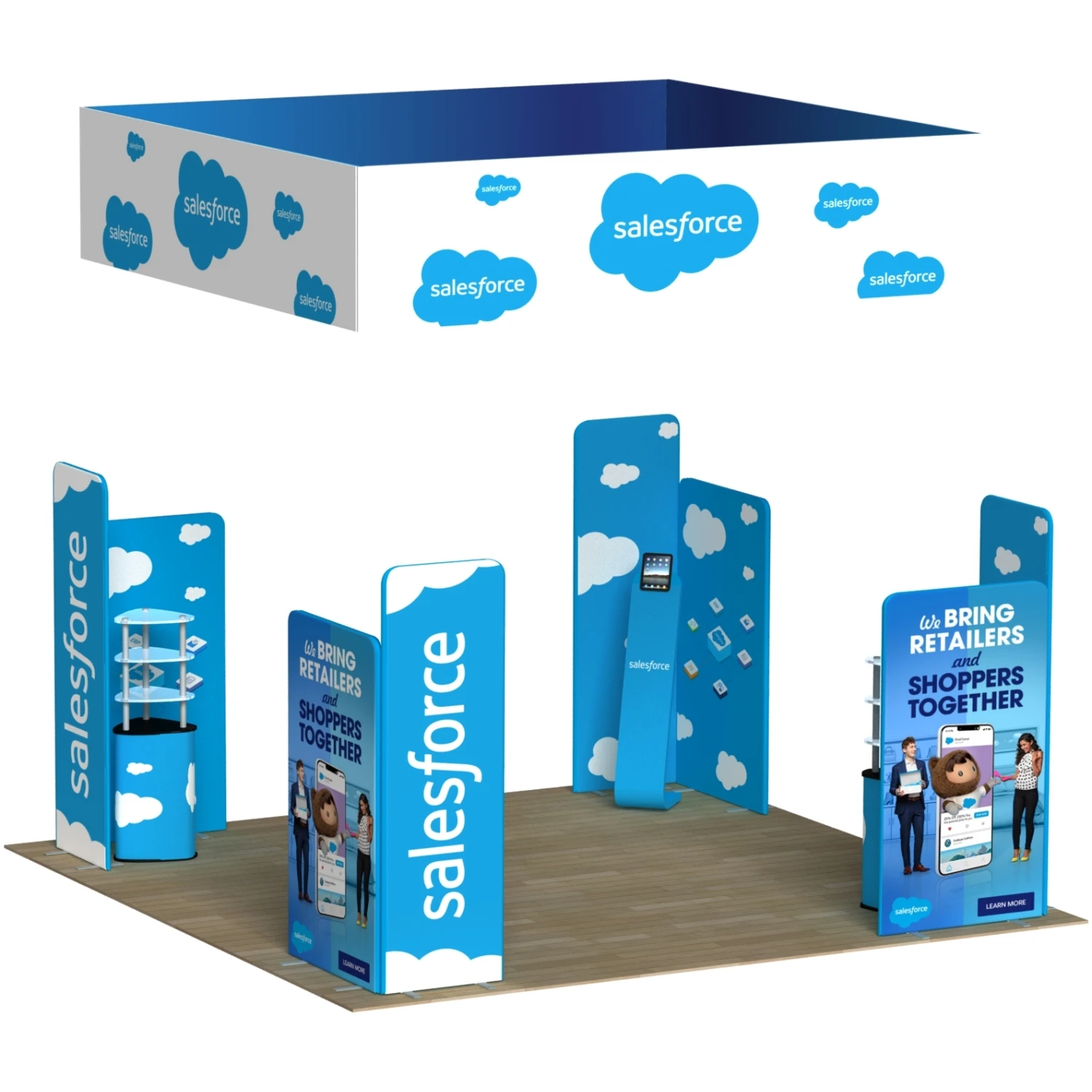
Splitting 200 Square Feet Into Working Zones
The reason exhibitors move up to a 10x20 is zoning. Twenty feet of frontage lets the booth read as three distinct areas without feeling chopped up: a front-facing demo or product station that catches aisle traffic, a mid-booth meeting space with stools or a small table, and a rear closet that hides cases, coats, and restock. Because the depth holds at ten feet, none of those zones pushes visitors out of comfortable conversation range, and staff can move behind the action instead of through it.
Renting modular hardware is what keeps the zoning honest from show to show. A counter that anchors lead capture at a busy Georgia World Congress Center convention can come out for an AmericasMart market where buyers expect to browse product on open shelving. The frame and the back wall stay constant; the interior furniture and fixtures flex to the audience, which is the practical payoff of a rental-first program over a fixed, owned structure.
The Back Wall as a 20-Foot Billboard
A 10x20 gives a brand twenty continuous feet of back wall, and on the long aisles of the Georgia World Congress Center that length is the single biggest advantage over a 10x10. Tension-fabric graphics stretch across the full span without seams, so a headline can run large enough to land from across the hall while a secondary band carries product or proof points at eye level. Renting the system means that fabric is the only thing that changes between markets, which keeps each show on-message without a print-and-store cycle.
Lighting turns the billboard on. A backlit section behind the demo station or a run of LED arms across the header lifts the wall above the hall's flat overhead light and gives the booth a finished, premium read. For exhibitors who want the whole wall to glow, the backlit and LED display systems carry the same fabric-frame logic into fully illuminated faces that drop into a 10x20 footprint.
Venue Fit Across Atlanta's Corridors
A 10x20 is portable enough to follow Atlanta's calendar across corridors. Downtown, it slots into the Georgia World Congress Center and the AmericasMart show floors where buyer and convention traffic rewards a longer face. In the Cumberland and Cobb submarket, the Cobb Convention Center runs exhibition halls totaling 144,000 gross square feet that divide into four 36,000-square-foot halls, and a 10x20 reads cleanly inside those more contained rooms without looking lost.
Northeast of the city, the Gas South Convention Center in Duluth offers a 90,000-square-foot exhibit hall with 30-foot ceilings, which gives a 10x20 unusual vertical headroom for a tall back wall or a hanging sign where the show permits one. Matching the booth's height and lighting plan to each hall's ceiling and rigging rules is the kind of venue-aware detail that keeps install day predictable rather than improvised.
Freight and Labor Planning for a Two-Booth Footprint
A 10x20 ships heavier than a 10x10 but still stays well short of island-scale freight, so it usually lands in the middle of a show's drayage tiers. Planning the crate count and weight up front, and confirming the advance-warehouse and show-floor delivery windows, keeps material handling charges predictable. A rented modular kit helps because it packs into a known set of cases that the labor crew has assembled before, which shortens install and dismantle.
For shows that allow exhibitor setup, a 10x20 can sometimes be installed by a small in-house team, but the wider back wall and any hanging or backlit elements often justify a short labor call, especially under union jurisdiction at the larger downtown venues. Booking that labor against a clear, dimensioned plan rather than guessing on-site is what keeps a two-booth footprint from eating into the show budget.
FAQ
How big is a 10x20 trade show booth?
A 10x20 is about 200 square feet, formed by combining two 10x10 inline spaces into twenty feet of frontage with ten feet of depth. The back wall is usually still capped near 8 feet tall.
What can I fit in a 10x20 that I cannot in a 10x10?
A 10x20 has room for three zones at once: a front demo or product station, a mid-booth meeting area, and a rear storage closet. A 10x10 usually forces you to pick just one of those.
Is a rental 10x20 worth it over buying?
For most growing exhibitors, yes. Renting lets the interior flex between demo-led and hospitality-led layouts per show, reskins graphics between AmericasMart markets, and avoids storage and refurbishment between Atlanta events.
Which Atlanta venues suit a 10x20?
It works across corridors: GWCC and AmericasMart downtown, Cobb Convention Center's 36,000 sq ft hall divisions in Cumberland, and Gas South in Duluth, where 30-foot ceilings allow a taller back wall.
Do I need labor to set up a 10x20?
Sometimes a small team can install it, but the wider back wall and any backlit or hanging elements often justify a short labor call, especially under union jurisdiction at the larger downtown venues.
Related Atlanta scopes
Continue with a connected Atlanta scope.
Inquiry
Trade Show Display Rental of Atlanta
Rental-first Atlanta trade show systems designed around venue-aware planning, modular reuse, and cleaner show-floor execution.