Booth Types / Backwall and Backdrop Displays Atlanta GA
Backwall and Backdrop Displays for Atlanta Shows
The back wall is the face of an Atlanta booth, and SEG fabric, pop-up, and step-and-repeat backdrops each do it differently. Rental backwall systems deliver a smooth, brand-forward face for GWCC halls, AmericasMart markets, and press and photo moments across the metro.
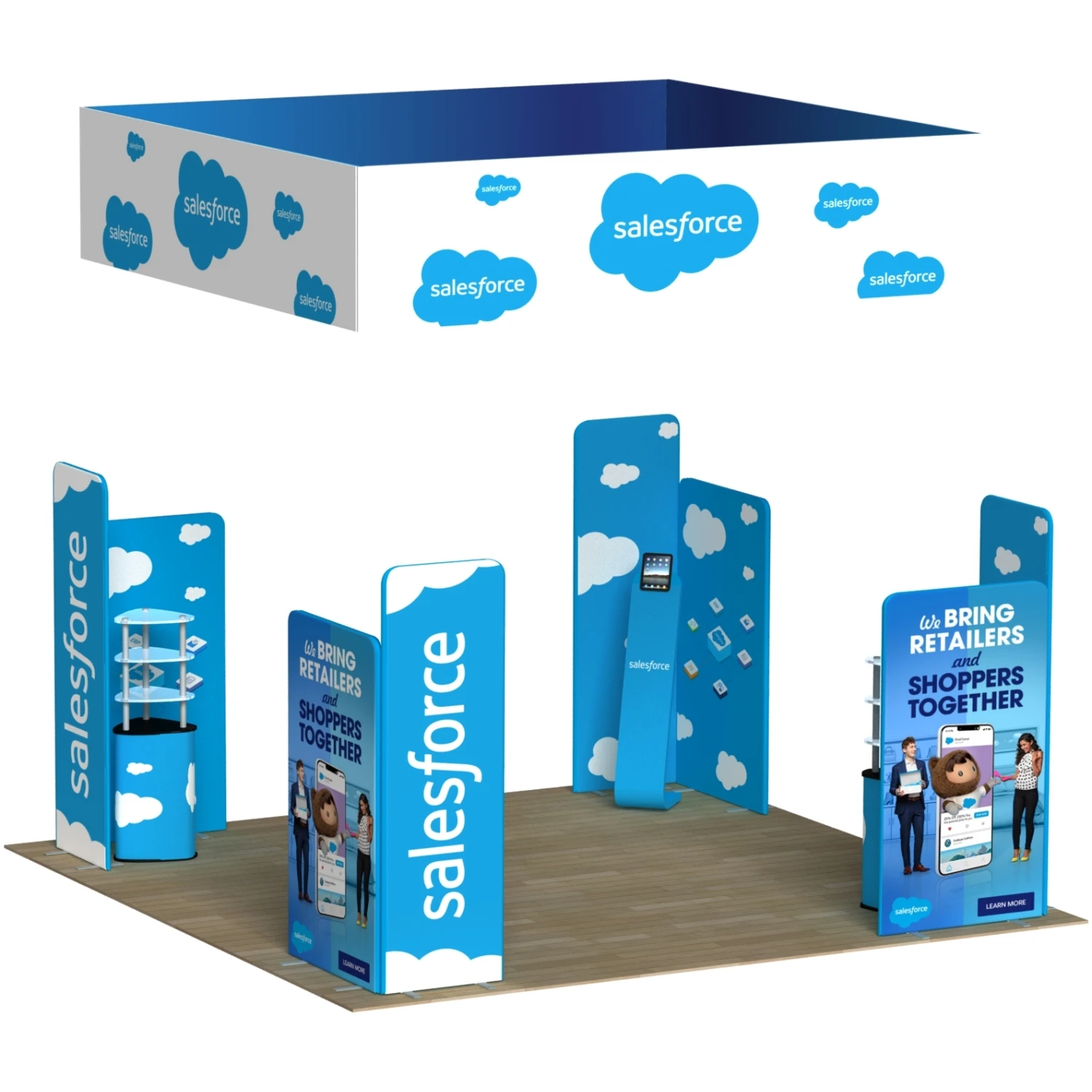
SEG, Pop-Up, and Step-and-Repeat Compared
The three backdrop families solve different problems. An SEG fabric wall is the premium choice for a primary booth face: the silicone-edge graphic seats into a channel around an aluminum frame and pulls the print drum-tight, leaving no seams, hot spots, or hardware in view. It reads as a finished architectural surface, and the fabric reskins between shows while the frame stays. A pop-up backdrop trades some of that polish for speed and portability; its accordion frame and magnetic panels go up fast and pack into a wheeled case, which suits exhibitors who set up their own booth.
A step-and-repeat backdrop is a specialist. Its repeating logo pattern is designed to land in photographs, so the layout, scale, and spacing are tuned for a camera rather than a passing eye. It is the wall behind a press interview, an award presentation, or a sponsor photo moment. Because these three jobs rarely overlap, renting lets a brand or planner bring the right wall to each occasion instead of forcing one backdrop to cover all of them.
Sizing a Back Wall to Atlanta Halls
Back walls have to be sized to the room as much as to the brand. In the Georgia World Congress Center, where the campus spans 1.5 million square feet of exhibit space across twelve halls, an SEG wall for an island can run wide and tall to hold its own in a large hall, subject to the venue's height and rigging rules. A 10x20 inline, by contrast, wants a wall that fills its twenty-foot frontage cleanly without overreaching the standard back-wall height.
Ceiling height changes the ceiling on ambition. The Gas South Convention Center in Duluth offers 30-foot ceilings over its 90,000-square-foot exhibit hall, which leaves room for a taller backdrop or a header where the show permits one, while a hotel ballroom around Peachtree Center caps the practical height much lower. Reading each venue's rules first, then sizing the rented wall to them, is the difference between a backdrop that fits and one that gets flagged on install day.
Step-and-Repeat for Press and Sponsor Moments
Atlanta hosts plenty of moments that exist to be photographed, and the step-and-repeat backdrop is built for them. The arenas and stadiums on and around the GWCC campus, including Mercedes-Benz Stadium and State Farm Arena, host sponsor activations and corporate hospitality where a branded photo wall anchors the media and social capture. The adaptive-reuse venues like Pullman Yards draw experiential and entertainment events where a step-and-repeat marks the entrance or the press line.
What makes a step-and-repeat work is restraint and geometry: a clean logo lockup repeated at a scale that stays legible when a subject stands in front of it, with enough margin that cropping for social never cuts a mark in half. Renting these walls fits their episodic nature, since a brand rarely needs the same photo backdrop twice, and a rental program can resize the pattern for a tight press point or a wide red-carpet line as the event demands.
Graphics, Install, and Reuse
Across all three formats, the print is the product. SEG fabric has to be dye-sublimated and finished with a silicone edge cut to the frame, pop-up panels need durable laminated graphics that tolerate repeated magnetic mounting, and step-and-repeat fabric should be matte to kill flash glare in photographs. Getting the production right is what separates a backdrop that looks built from one that looks improvised.
Reuse is where rental economics land. Frames are durable and standard, so a recurring Atlanta exhibitor keeps the hardware and swaps printed faces between shows, controlling cost and storage. An SEG wall that headlines a booth at a downtown convention can be reskinned for the next market, and that same structural thinking carries over to the full custom exhibit booths when a brand is ready to build a larger environment around the wall.
FAQ
What is an SEG fabric backwall?
A silicone-edge graphic wall stretches a dye-sublimated fabric drum-tight inside an aluminum frame, leaving no seams or visible hardware. It reads as a smooth, premium booth face, and the fabric reskins between shows while the frame stays.
What is a step-and-repeat backdrop?
A backdrop with a repeating logo pattern designed for cameras. It anchors press interviews, award stages, and sponsor photo moments, with the logo scaled and spaced so it stays legible behind a subject and survives social cropping.
How is a pop-up backdrop different from an SEG wall?
A pop-up uses an accordion frame and magnetic panels that one or two people raise in minutes and pack into a wheeled case. It trades some of the SEG wall's smooth polish for speed and self-setup portability.
How big can my back wall be in Atlanta?
It depends on the venue. GWCC halls allow wide, tall island walls subject to rigging rules, Gas South in Duluth offers 30-foot ceilings for a taller backdrop, and hotel ballrooms around Peachtree Center cap the practical height lower.
Why rent backwall displays?
Frames are durable and standard, so renting lets you reskin printed faces between shows and match the right format to each occasion without owning and storing SEG, pop-up, and step-and-repeat walls year-round.
Related Atlanta scopes
Continue with a connected Atlanta scope.
Inquiry
Trade Show Display Rental of Atlanta
Rental-first Atlanta trade show systems designed around venue-aware planning, modular reuse, and cleaner show-floor execution.